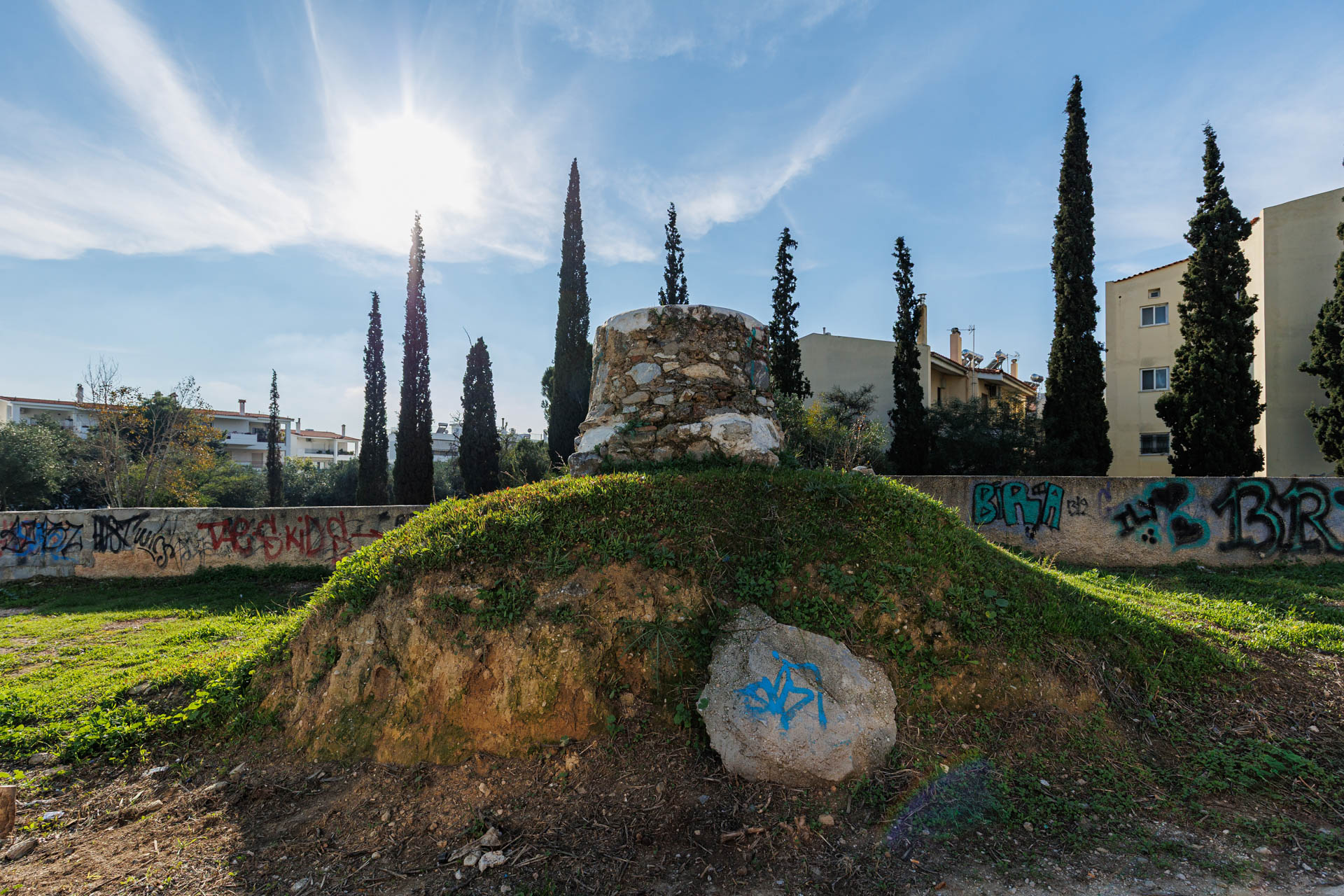
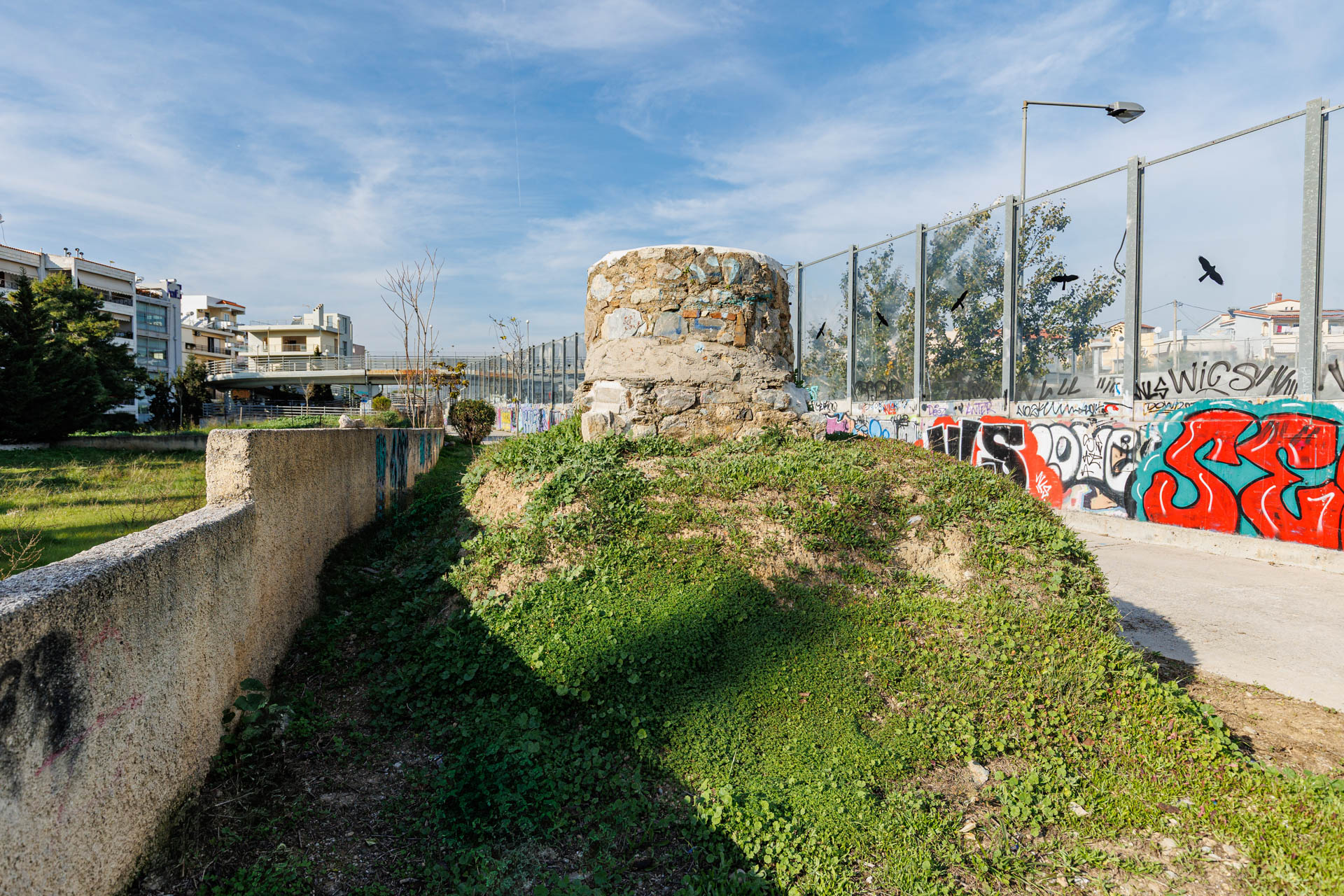
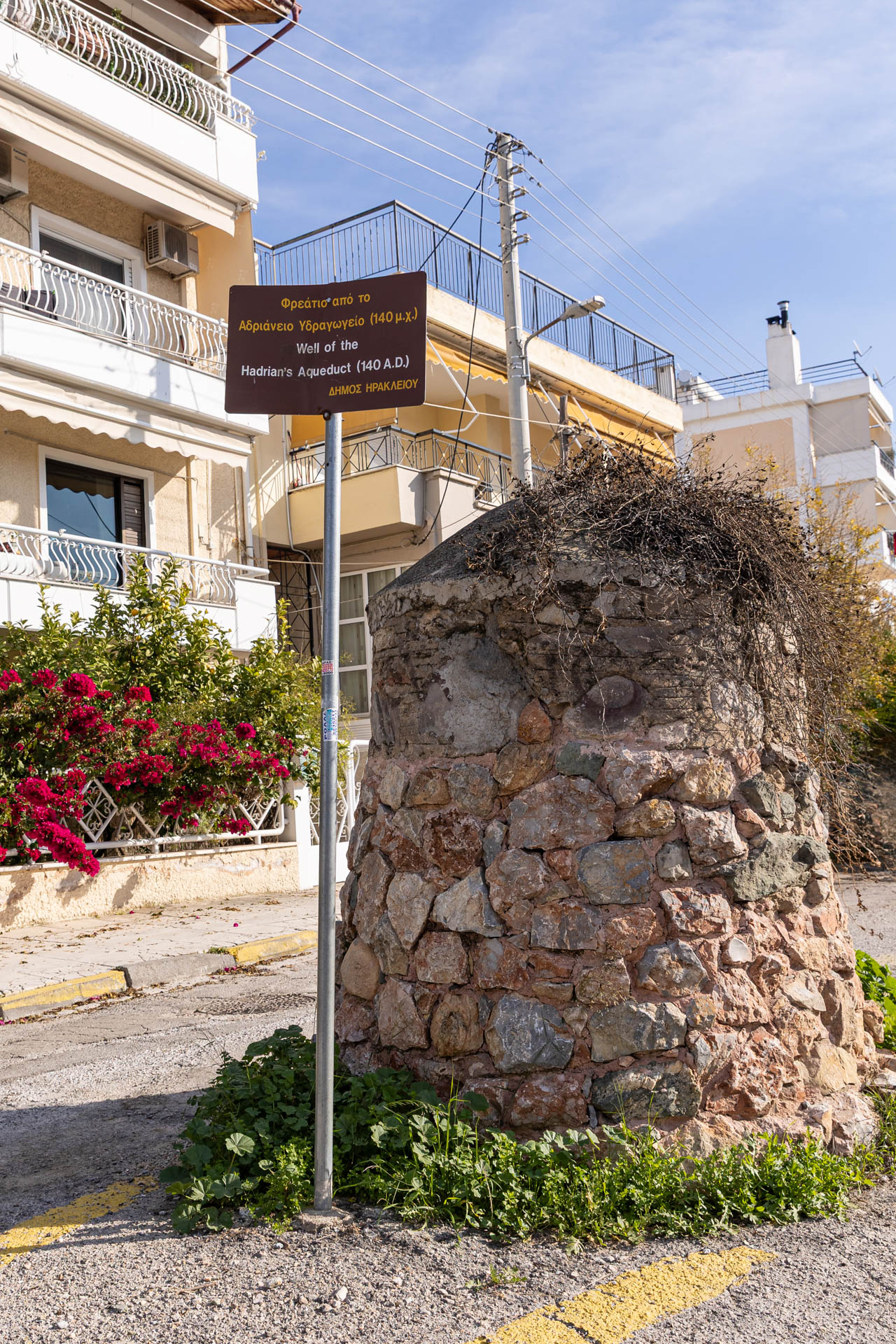
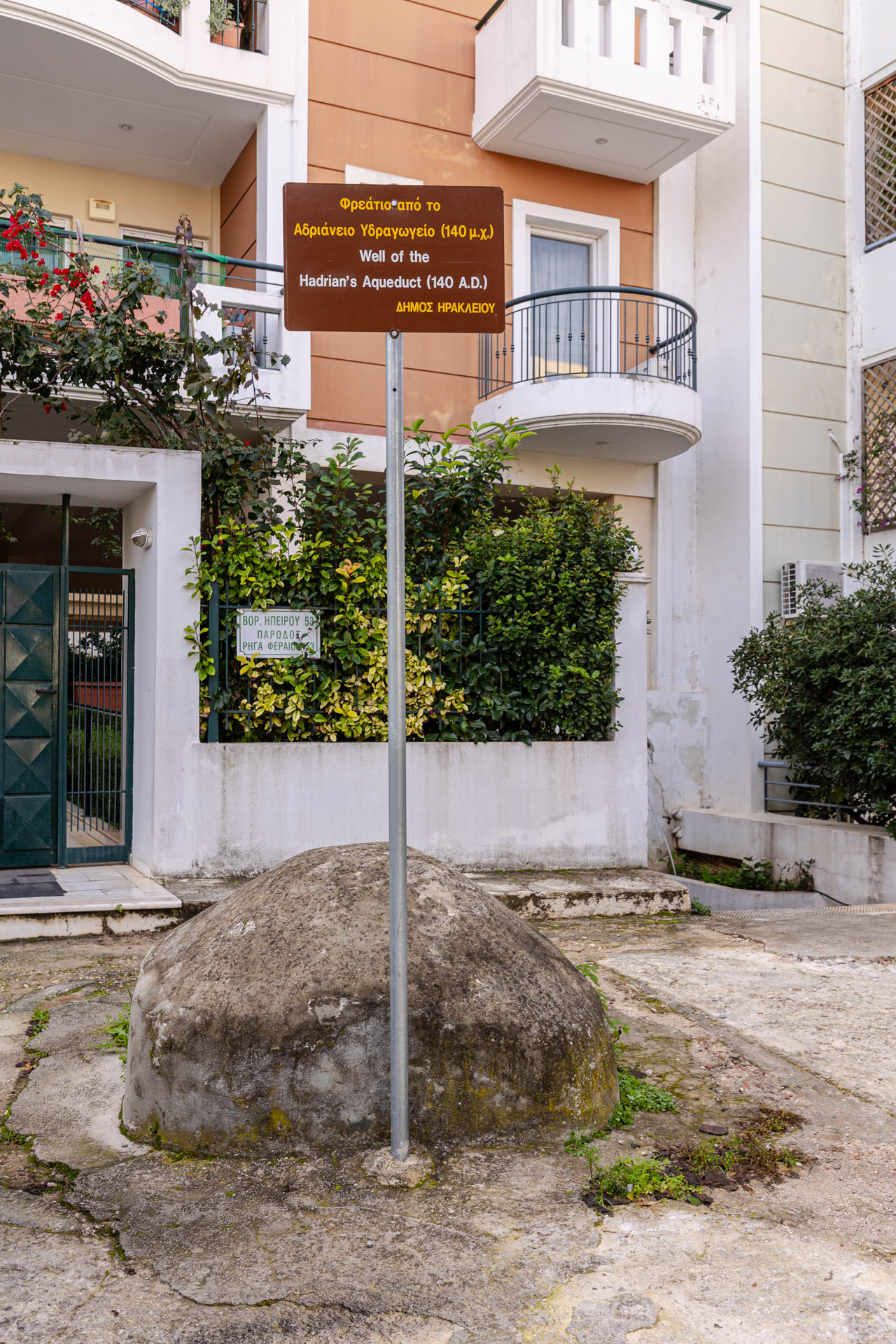
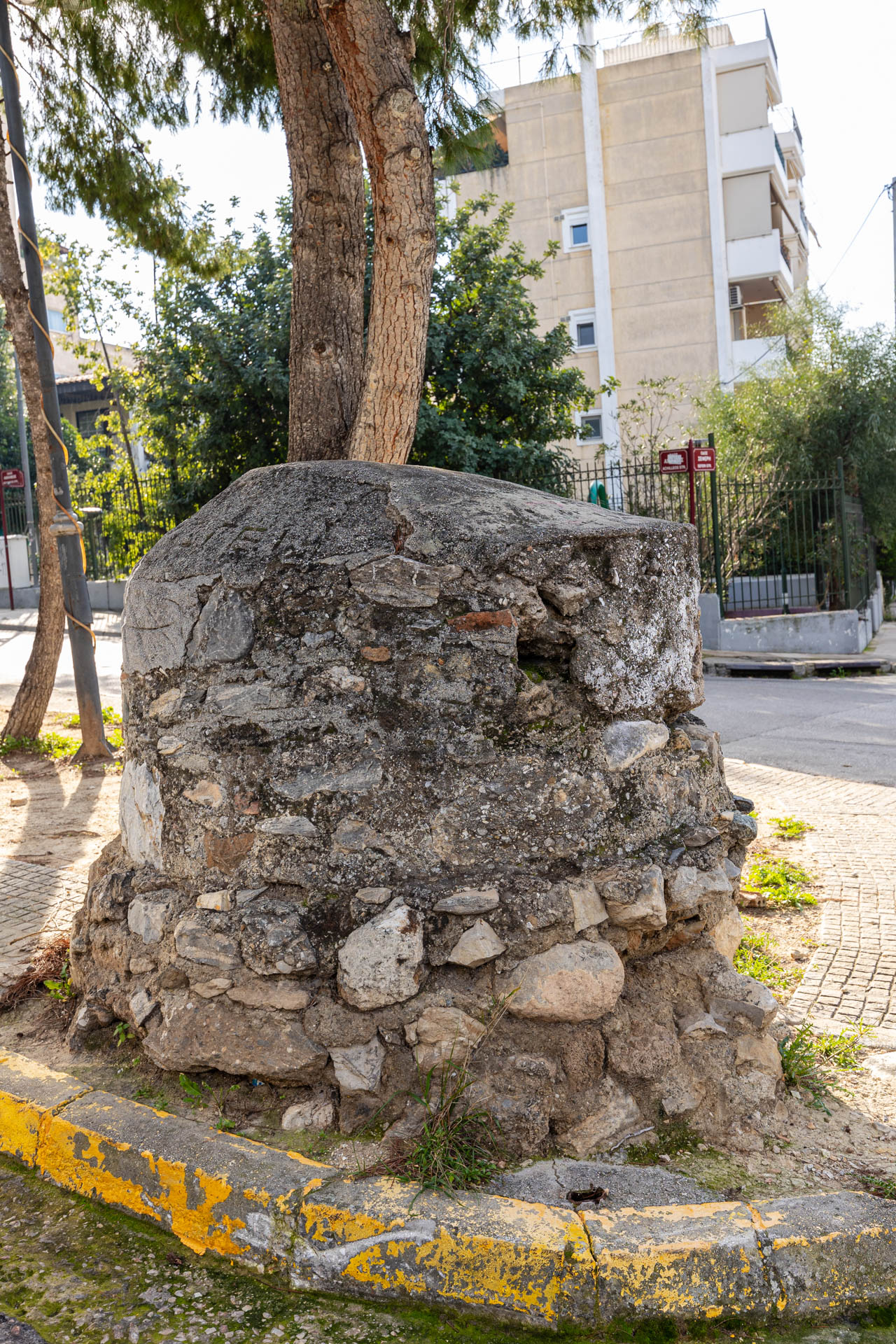
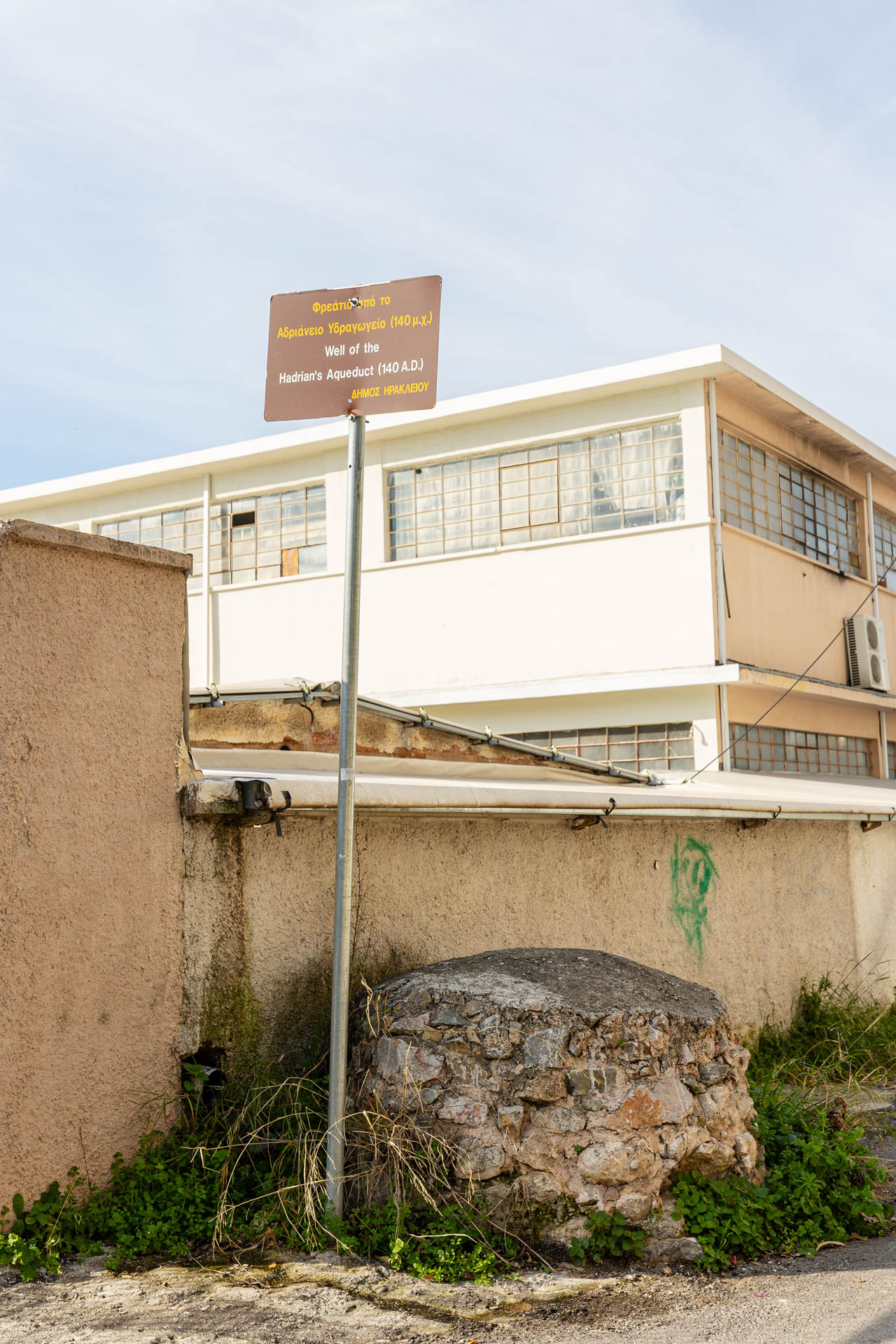
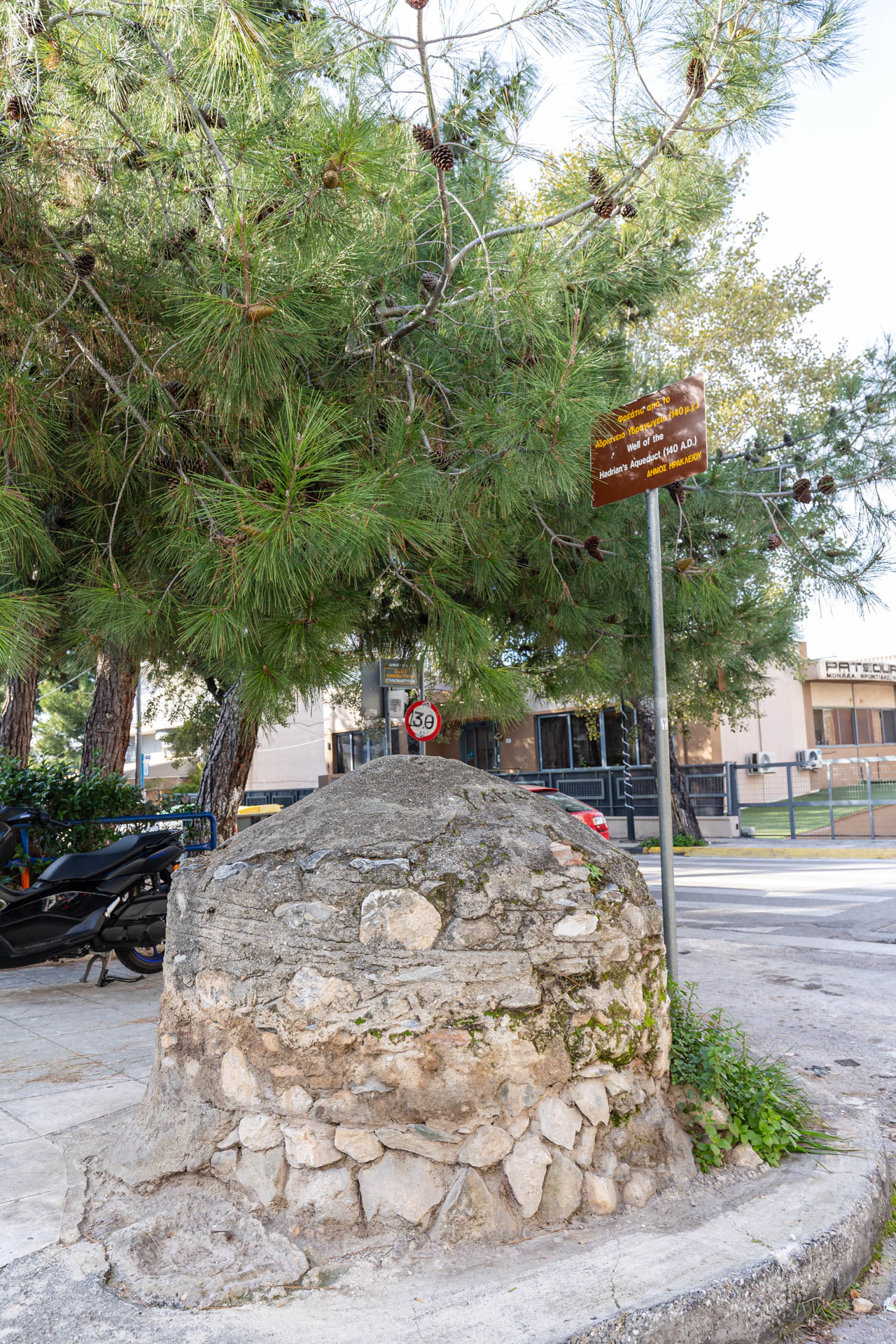
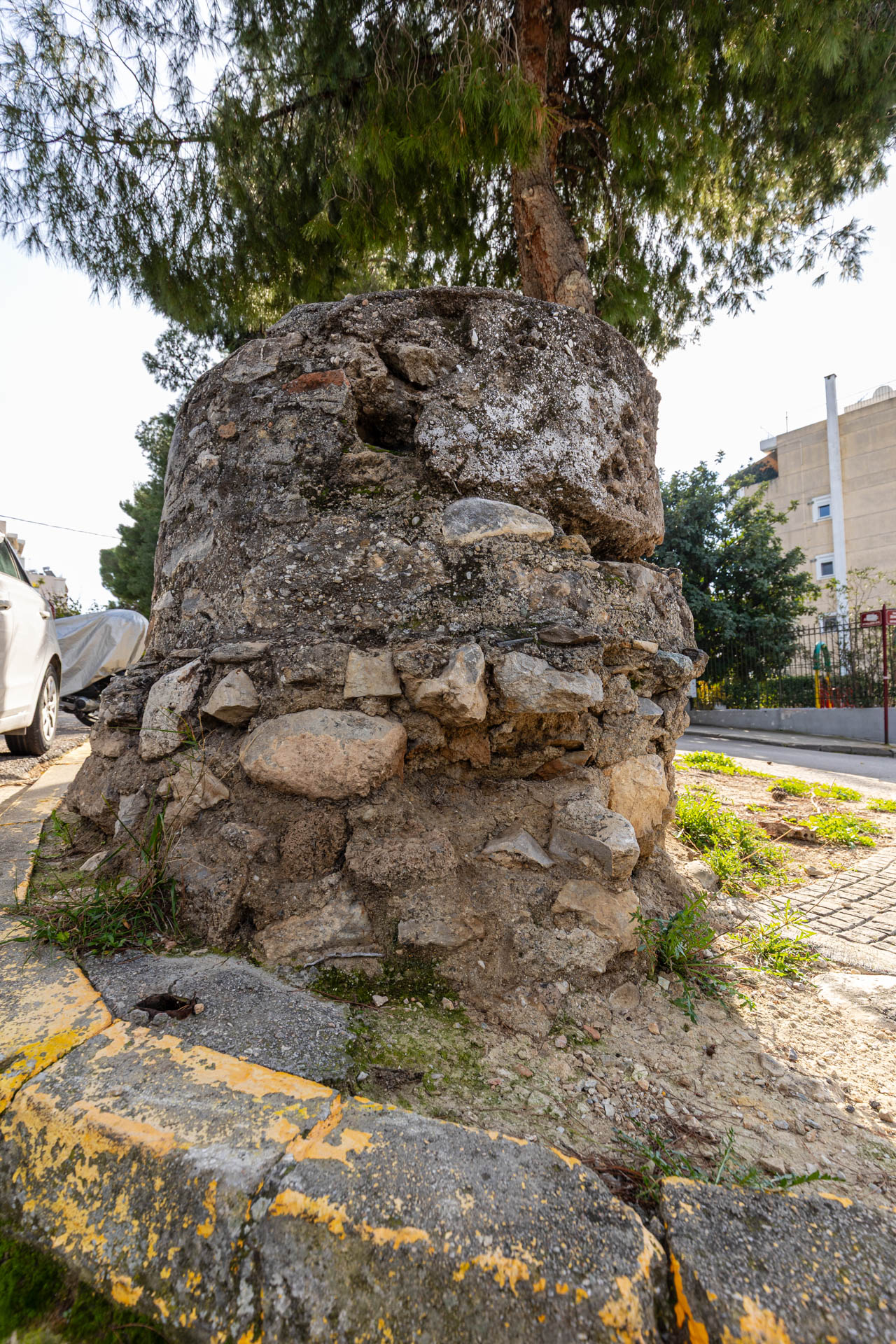
Hadrian’s Aqueduct is one of the most significant engineering works of the Roman period in Attica. It was constructed in the 2nd century AD, during the reign of Emperor Hadrian, to supply ancient Athens with water from Mount Parnitha. It is an underground aqueduct stretching for several kilometres, featuring shafts, galleries, and the era’s most advanced construction techniques. It flows through the area of Heraklion Attikis at 16 locations, 10 of which are visible above ground (as inspection shafts), highlighting both the historical importance of the area since antiquity and the city’s long-standing connection with water. Today it stands as a remarkable — if largely hidden — monument of technical innovation and proof of the historical and cultural heritage of Attica.
Locations of aqueduct remains:
165: Voreiou Ipirou Str. near Kyrineias Str.
164: 474 Irakliou Ave.
162: 13 Ethnomartyron Str.
161: Ethnomartyron and Pefkon Str.
160: 26 Ethnomartyron Str.
159: Ethnomartyron Str.
158: Tzavela Str. near Thouriou Str.
157: Markou Botsari Str. between Nikitara and Zaimi Str.
156: Corner of Markou Botsari and Prasinou Lofou
150: Next to Attiki Odos near the Karytaina Str. bridge